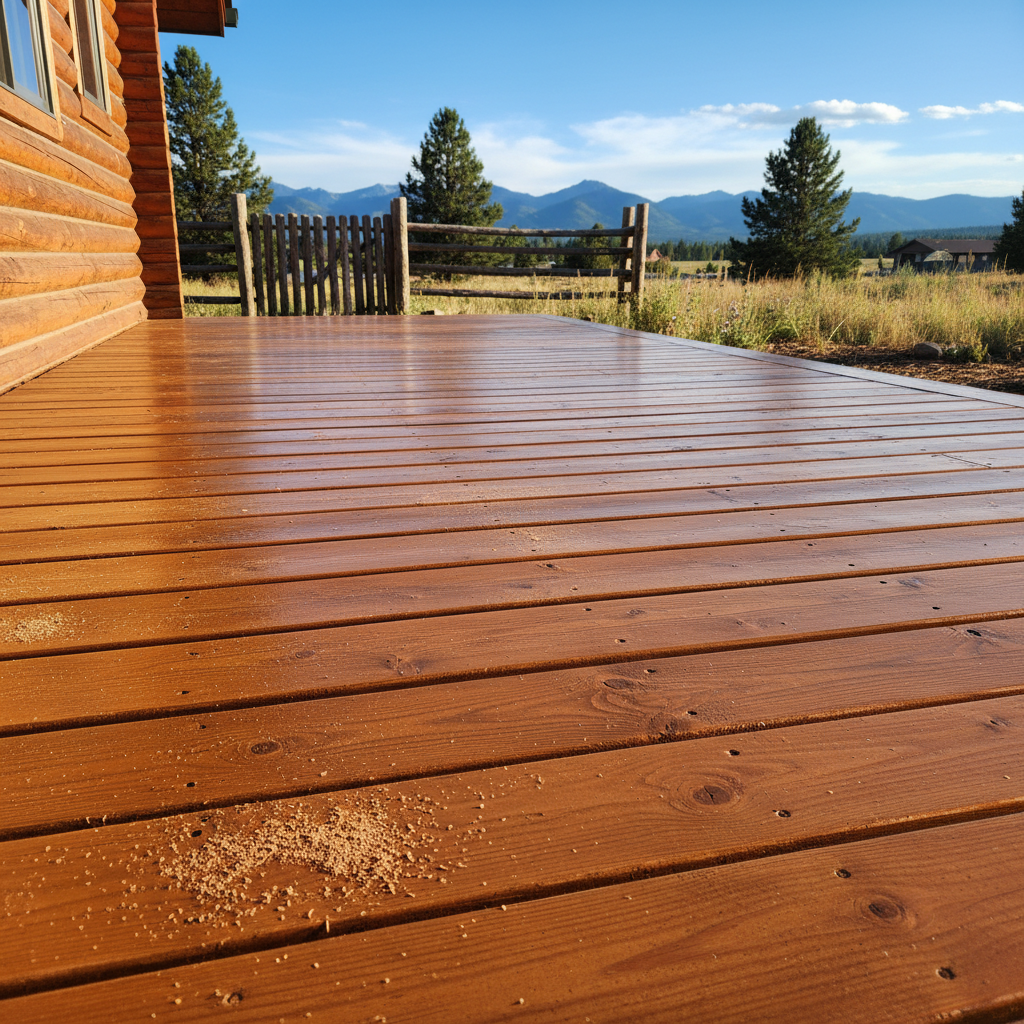
Alright, let's talk decks. You've got that beautiful outdoor space, maybe overlooking Flathead Lake or tucked away in a quiet neighborhood like those out by the Buffalo Hill Golf Club. It's seen some sun, some snow, and probably a few muddy boots, hasn't it? Now it's looking a little tired, and you're thinking about staining it. Good call. A fresh stain isn't just about looks; it's about protecting your investment from our Montana weather.
Before You Even Think About Staining
First things first: you can't just slap a new coat of stain on an old, dirty deck. That's a recipe for peeling, uneven color, and a whole lot of frustration. You've got to clean it, and clean it well.
- Clear it off: Get all the furniture, planters, and the kids' toys off the deck. Everything.
- Sweep and Scrape: Sweep off any loose debris. If you've got old, peeling stain, you'll need to scrape that off. A stiff wire brush can help, or a paint scraper. This is often the part where folks realize just how much work this actually is.
- Clean it good: Use a dedicated deck cleaner. Follow the instructions on the bottle – usually, you'll apply it, let it sit, and then scrub. A stiff-bristle brush on a pole works wonders here. For really tough grime, mold, or mildew, you might need a pressure washer. Now, be careful with a pressure washer. Too much pressure, or holding it too close, and you'll gouge the wood. I've seen plenty of decks that look like they've been attacked by a weed wacker because someone got a little too aggressive. If you're not confident, a good scrub brush and some elbow grease might be slower but safer.
- Rinse, Rinse, Rinse: Make sure all that cleaner is gone. You don't want any residue left behind.
- Let it Dry: This is crucial. Your deck needs to be bone dry before you apply any stain. Depending on the weather, that could be 2-3 days. Don't rush it. If you stain a damp deck, you're just trapping moisture, and that's asking for trouble down the road.
- Sand (Optional, but Recommended): If your deck is really rough, or you want a super smooth finish, a light sanding with 80-100 grit sandpaper can make a big difference. It opens up the wood grain, helping the stain penetrate better.
Choosing Your Stain: What I Use Around Kalispell
There are a ton of stains out there. For decks around here, with our hot summers and cold, snowy winters, you want something that's going to hold up. I generally recommend oil-based penetrating stains or high-quality water-based acrylic-oil hybrid stains. They soak into the wood, protecting it from the inside out, and they tend to wear more gracefully than film-forming stains that just sit on top and can peel.
- Transparent/Semi-Transparent: These show off the natural wood grain, which is beautiful, especially if you have nice cedar or redwood. They offer good UV protection but less pigment.
- Semi-Solid/Solid: These have more pigment, offering more UV protection and covering up more of the wood grain. If your deck has some imperfections or you want a uniform color, these are a good choice.
Always test a small, inconspicuous area first to make sure you like the color and how it looks on your specific wood.
Applying the Stain: The Nitty-Gritty
Okay, the deck's clean, dry, and you've got your stain. Now for the fun part.
- Weather Check: Don't stain in direct, blazing sun, or if rain is in the forecast. Overcast, mild days are your best bet.
- Work in Sections: Don't try to do the whole deck at once. Work on a few boards at a time, going from one end to the other. This helps avoid lap marks.
- Brush or Roller? For most decks, a good quality brush is your best friend. It lets you work the stain into the wood grain. A roller can speed things up on flat surfaces, but you'll often need to back-brush to ensure even penetration and no puddling.
- Thin Coats: Don't glob it on. Two thin coats are always better than one thick one. Let the first coat dry according to the manufacturer's instructions before applying the second.
- Edges and Railings First: I always start with the railings, spindles, and any vertical surfaces first, then move to the deck floor. This way, any drips on the floor can be caught by your subsequent floor staining.
After the Stain: Maintenance Matters
You've put in the work; now protect it. Give your deck a good week or so to fully cure before you put heavy furniture back or have a big party. After that, a little maintenance goes a long way.
- Keep it Clean: Sweep off leaves and debris regularly. If something spills, clean it up quickly.
- Annual Wash: A light wash with a mild soap and water solution (or a very gentle deck cleaner) once a year can help keep mildew and dirt from building up.
- Re-stain as Needed: How often you need to re-stain depends on the stain type, sun exposure, and how much traffic your deck gets. Transparent stains might need it every 1-2 years, while solids can last 3-5 years. You'll know it's time when the water stops beading up, or the color starts to look faded and worn.
DIY or Call Kalispell House Painters?
So, can you do this yourself? Absolutely. Many homeowners do, and they do a fine job. The cleaning and prep work are the most labor-intensive parts, and if you're willing to put in the time and effort, you can save some money.
However, if your deck is large, has a lot of intricate railings, or is in really rough shape, it can be a massive undertaking. If you're short on time, don't have the right tools (like a good pressure washer or industrial sander), or just plain hate scrubbing, that's when you call in a pro. We've got the equipment, the experience, and we can get it done efficiently, making sure it's prepped right and stained right the first time. We know what works best for Kalispell's climate and how to handle everything from old, weathered pine to new composite decking.
Either way, a well-maintained deck adds value and enjoyment to your home. Don't let it go too long without some love.